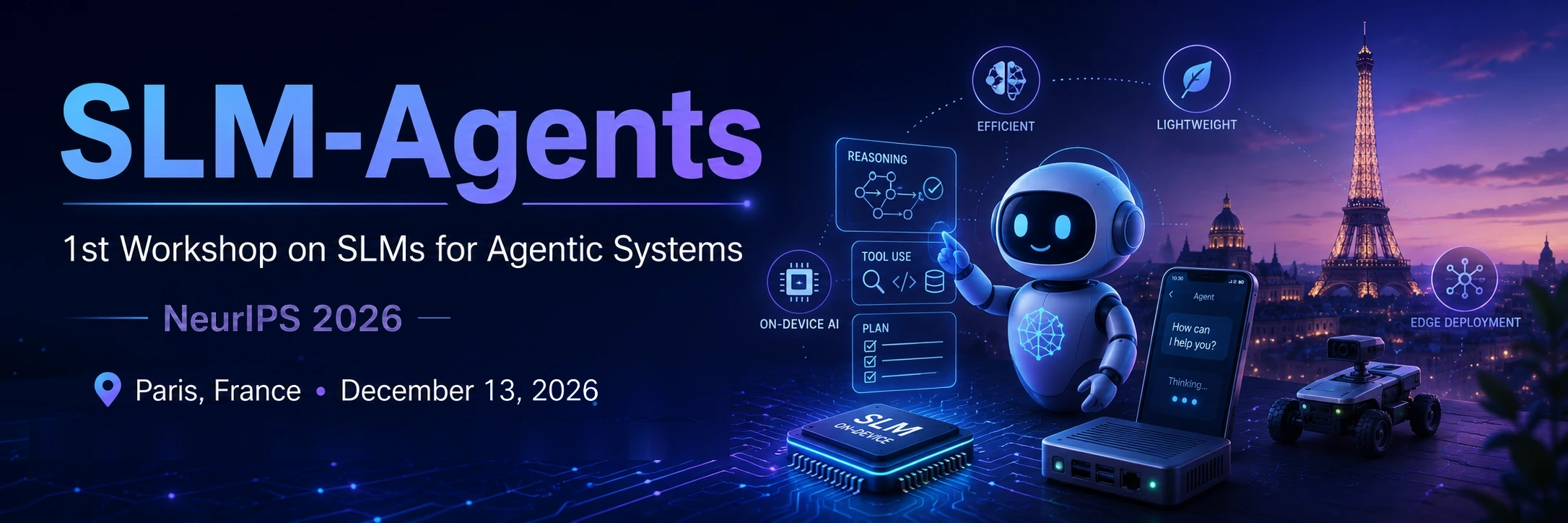
NeurIPS 2026
SLM-Agents
1st Workshop on SLMs for Agentic Systems
About the workshop
Scope and objectives
This workshop is dedicated to small language models (SLMs) as the foundation of agentic AI systems. Although large language models (LLMs) have demonstrated remarkable capabilities, their dependence on cloud infrastructure creates fundamental barriers to deployment in agentic pipelines—latency, privacy, connectivity, and substantial computational cost. SLMs offer a compelling alternative: recent studies argue that SLMs, not LLMs, might be a right option for the repetitive, narrowly scoped sub-tasks that dominate real agentic workloads. SLMs make it possible for autonomous AI agents to plan, reason, and act directly on resource-constrained devices such as smartphones, IoT systems, robotics platforms, and embedded systems. The workshop sits at the intersection of three rapidly evolving fields: (1) efficient language model architectures and compression techniques, (2) agentic AI systems capable of autonomous reasoning and tool use, and (3) edge computing and on-device deployment.
Open problems
- Compression and distillation: quantization, pruning, knowledge distillation, and architectural innovations for parameter-efficient LMs.
- Hardware co-design: on-device inference optimization, NPU/accelerator-aware design, memory-bandwidth-bound serving, and energy-budgeted decoding.
- Training for cooperation: fine-tuning SLMs for tool use, planning, multi-step reasoning, and small–large model handoff in heterogeneous agent stacks.
- Evaluation and benchmarks: task-success-per-watt, latency- and memory-aware leaderboards, and reproducible on-device evaluation harnesses.
- Applications and safety: privacy-preserving local processing, federated learning, and deployment case studies across mobile assistants, robotics, healthcare, automotive, and financial services, with associated safety, robustness, and provenance considerations.
Research contributions
Call for Papers
We invite original work in progress on small language models for agentic systems.
Submission format
- Short paper — up to 4 content pages
- Long paper — up to 6 content pages
- NeurIPS workshop template
- Double-blind review through OpenReview
- Three reviewers per submission
Scope and publication
- Original work in progress
- Not under review at or accepted to the NeurIPS 2026 main program
- Not previously published at a major ML or AI venue
- Accepted papers hosted on OpenReview with author opt-in
- Non-archival and not included in the NeurIPS proceedings
Topics of interest
- SLM architectures, training and inference
- Agentic reasoning, planning and tool use
- Hardware-aware and on-device deployment
- Evaluation, benchmarks and efficiency
- Privacy, safety, robustness and applications
Submissions are now closed. Thank you to everyone who submitted.
Submission timeline
Important Dates
Call for Papers released
July 18, 2026
Submission portal opens
July 25, 2026
Paper submission deadline
September 6, 2026 (AoE)
Reviewing period
September 7–19, 2026
Acceptance notification
September 22, 2026
Camera-ready deadline
October 4, 2026
Workshop
December 13, 2026
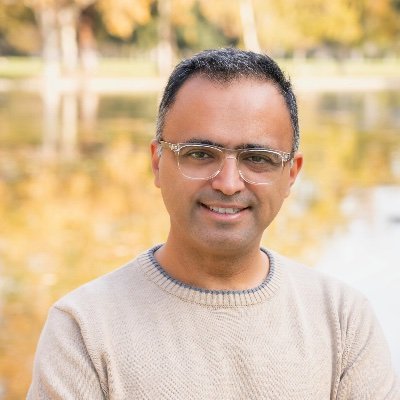
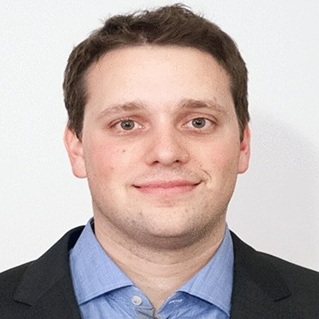
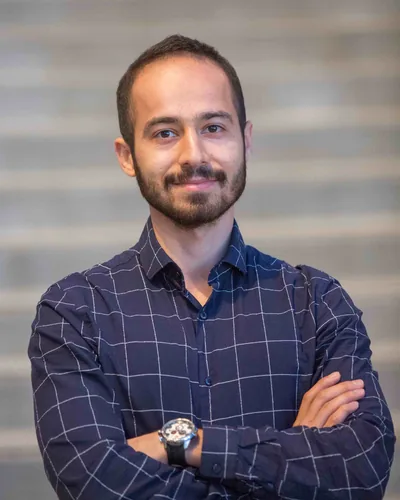
Featured talks
Invited Speakers


Community discussion
Invited Panelists
One day · In person · Paris
Workshop Schedule
Workshop schedule: TBD.
Workshop leadership
Organizing Committee


Workshop leadership
Executive Committee


Peer review
Scientific Committee
Head
Meta Reviewers
- Alireza Ghaffari Cerebras
- Amin Edraki Huawei Toronto Research Centre
- Amin Nikanjam Huawei Toronto Research Centre
- Hamed Mousazadeh AMD
- Hojat Yeganeh IMAX
- Bang Liu Université de Montréal
- Walid Ahmed Workday AI Research
- Ghouthi Boukli-Hacene Sony
- Sobhan Hemati Huawei Noah's Ark Lab
Reviewers
- Mohammadreza Sadeghi AMD
- Bhushan Mahajan AMD India
- Mohammad Hossein Moslemi Huawei Noah's Ark Lab
- Saurabh Bodhi AMD
- Marzieh Tahaei Autodesk
- Ian Colbert AMD USA
- Mohammadreza Tayaranian McGill University
- Mojtaba Valipour University of Waterloo
- Sharareh Younesian AMD
- Ramchalam Ramakrishnan Qualcomm
- Ritam Haldar Qualcomm
- Xinlin Li Microsoft
- Shiyuan Feng Huawei Toronto Research Centre
- Asiye Baghbani Huawei Montreal Research Center
- Mehdi Rahimifar Huawei Noah's Ark Lab
- Ali Bahri Huawei Noah's Ark Lab
- Mehrdad Noori Huawei Montreal Research Center
Review outcomes
Accepted Papers
Accepted papers will be listed after the review process is complete.
Participation
Policies, Accessibility, and Inclusion
Non-archival workshop
Accepted workshop submissions are non-archival and may be submitted elsewhere after the workshop, subject to the policies of the other venue.
Participation and inclusion
The program includes mentorship for junior researchers, a dedicated lightning-talk track, outreach through affinity communities, and an inclusive workshop environment for participants across backgrounds and career stages.
NeurIPS policies
With thanks to our supporters
Sponsors
We thank the organizations supporting the SLM-Agents workshop.



Stay informed
Contact and updates
For questions, contact the organizers at neurips.slmagents.2026@gmail.com. Last updated .